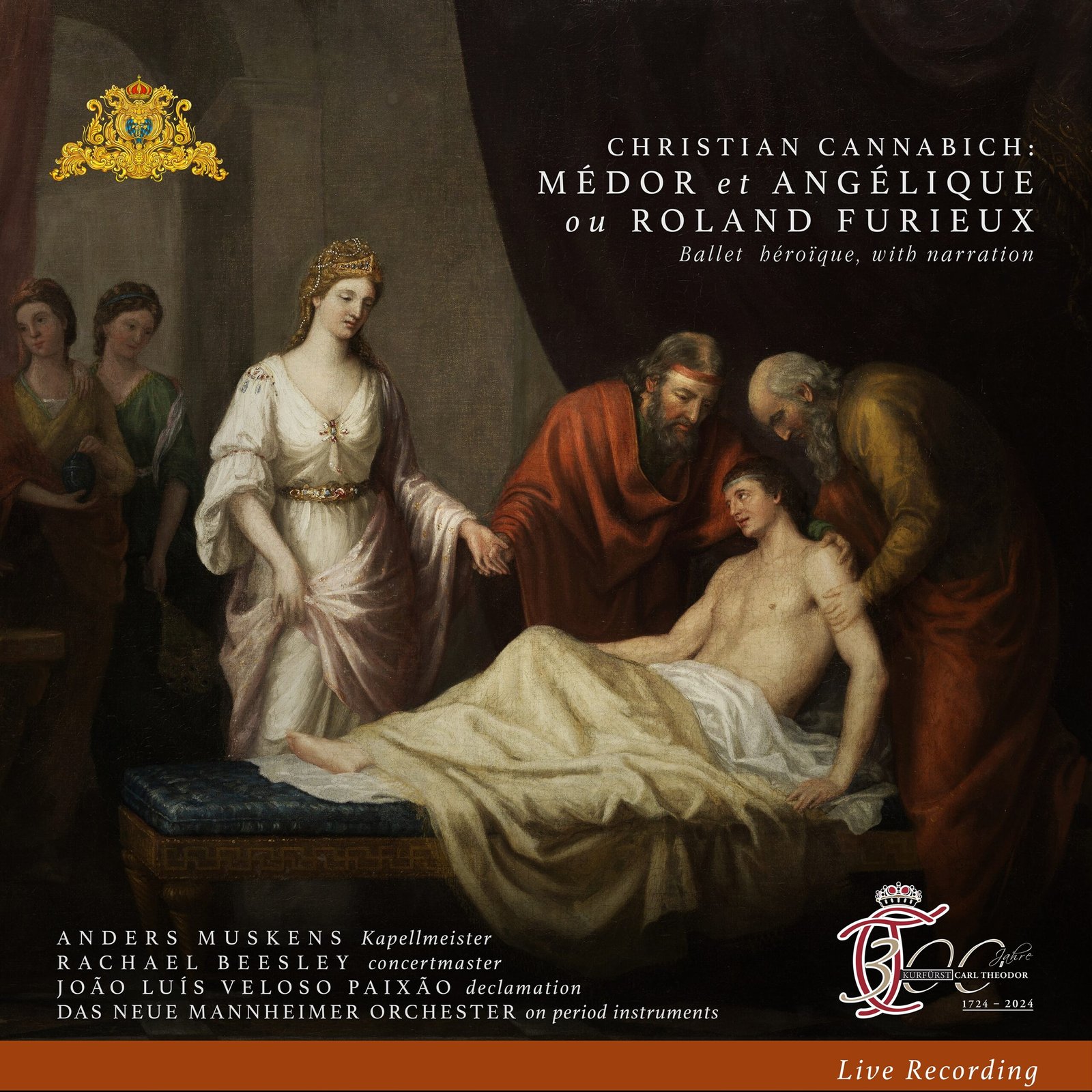
| (Halifax/Kjipuktuk, NS) Das Neue Mannheimer Orchester, led by artistic director Anders Muskens, releases Cannabich: Médor et Angélique as the fourth instalment of its ongoing recording project dedicated to the musical legacy of the eighteenth-century Mannheim Court. The release forms part of the ensemble’s 300-year jubilee series honouring Carl Theodor, whose court fostered one of the most influential orchestral cultures of the Enlightenment. During Carl Theodor’s residence in Mannheim (1742–1778), the court became a major centre for artistic and intellectual exchange, attracting musicians, philosophers, scientists, and artists from across Europe. Within this environment, the Mannheim Court Orchestra developed a distinctive style noted for its expressive orchestral writing, dramatic gesture, and narrative clarity—qualities that would later influence composers such as Mozart. Despite its historical significance, much of this repertoire has remained underrepresented in modern performance. |
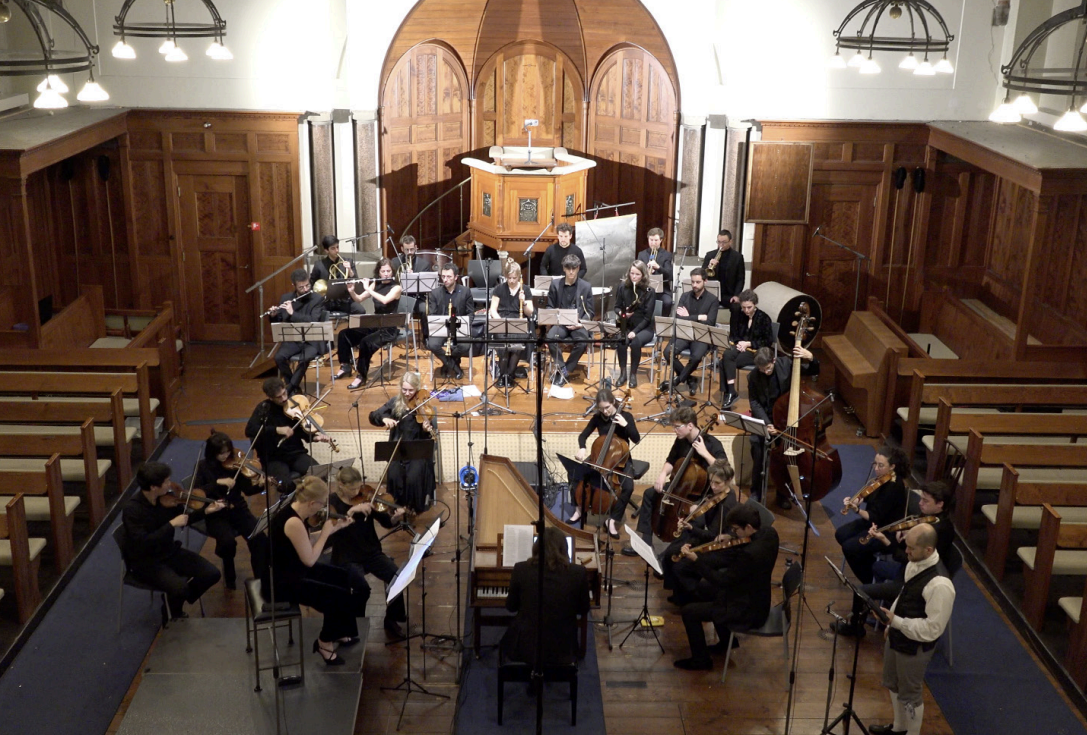
| This fourth instalment presents Christian Cannabich’s Médor et Angélique, ou Roland furieux, composed in Mannheim around 1768 and performed at the Mannheim Opera Theatre during the March Fair of 1770. Based on an episode from Ludovico Ariosto’s Orlando furioso, the ballet follows the story of the wounded youth Médor and Angelica, Queen of Cathay, whose unexpected union unfolds amid conflict. The work reflects the Mannheim School’s engagement with the ballet en action and melodrama, genres that sought to merge music with narrative, gesture, and dramatic effect. For this recording, Das Neue Mannheimer Orchester collaborates with concertmaster Rachael Beesley and historical-acting specialist João Luís Veloso Paixão, whose French narration restores elements of declamation and dramatic context integral to the work’s original conception. The recording is performed on period instruments. Through the integration of text, music, and historical gesture, this release offers a considered approach to Cannabich’s musical storytelling, situating it within the broader theatrical and aesthetic culture of eighteenth-century Mannheim. Leaf Music is an independent recording label based in Halifax, Nova Scotia and Nashville, Tennessee, making and distributing high-quality classical music recordings by artists and composers from across North America. Our growing catalogue of solo, orchestral, and chamber music is distributed by Naxos of America to the world’s most important music retailers, download providers, and streaming services. Leaf Music is also a provider of professional audio and video production, post-production services and integrated music marketing and distribution in North America. |
CARL THEODOR JUBILEE COLLECTION